Boiler Repair in Madison (Brooklyn), Brooklyn
Systematic troubleshooting, safety control inspections, and mechanical repairs for steam and hot-water heating systems across the Madison neighborhood of Brooklyn.
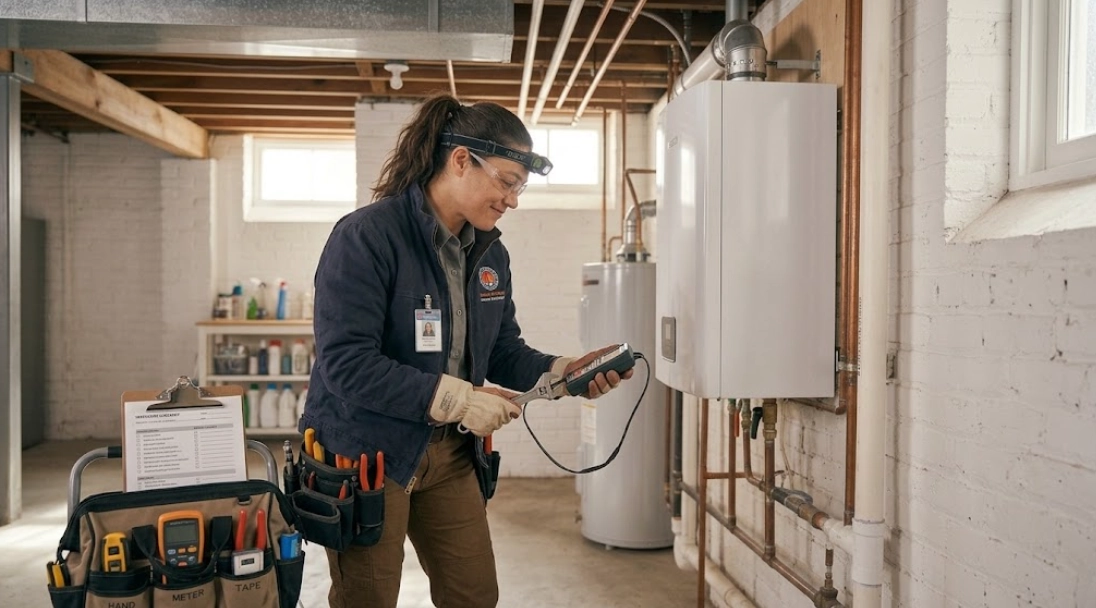
Reliable Heating Diagnostics for Madison Residences
The Madison neighborhood of South Brooklyn—bounded generally by Kings Highway, Avenue P, Ocean Avenue, and Nostrand Avenue—features a distinguished architectural fabric of brick detached homes, solid semi-detached two-family houses, and pre-war residential buildings. During long New York City winters, an operational heating system is essential for maintaining household comfort, personal health, and structural safety. When heating equipment malfunctions, property owners requiring focused boiler repair Madison Brooklyn benefit from diagnostic troubleshooting that identifies underlying mechanical problems rather than guessing at quick fixes.
Whether your basement contains a low-pressure steam boiler serving cast-iron radiators or a closed-loop hydronic system feeding copper baseboards, heating failures can develop gradually or strike without warning. Facing a sudden no heat boiler repair Madison Brooklyn call on a freezing night is stressful. Experienced technicians evaluate every critical subsystem—from burner ignition controls and gas delivery manifolds to water feed valves and circulator relays—to restore dependable heating safely.
Understanding Your Heating System: Steam vs. Hot Water
Proper diagnosis begins by understanding the foundational mechanics of the heating equipment installed in your building. While both varieties commonly burn natural gas, their operating pressures, water requirements, and heat distribution principles differ substantially.
Low-Pressure Steam Systems
Common in classic detached and semi-detached homes across Madison, steam boilers boil water inside cast-iron sections to generate steam vapor that expands upward through vertical riser pipes to cast-iron radiators. Operating at low pressures (typically between 0.5 and 2.0 PSI), steam systems require precise water level monitoring through a glass gauge column, regular sediment blowdowns of the low-water cutoff float chamber, and properly pitched distribution piping to allow condensed water to return freely to the boiler.
Hydronic Hot-Water Systems
Frequently found in modernized homes and multi-zone layouts, hydronic boilers maintain a completely closed, water-filled loop operating between 12 and 20 PSI. Rather than boiling water, the unit heats water to approximately 160°F to 180°F, using electric circulator pumps to drive hot water through fin-tube baseboard convectors or radiant floor circuits. Critical components include diaphragm expansion tanks, pressure-reducing fill valves, high-limit aquastats, and automatic air vents.
Whether you require targeted steam boiler repair Madison Brooklyn to correct noisy water hammer or need specialized hot water boiler repair Madison Brooklyn to resolve failing circulator motors or zone valve switches, accurate equipment classification ensures appropriate service procedures.
Boiler Warning Signs and Common Failure Modes
Heating systems often display subtle warning symptoms before shutting down entirely. Being alert to these indicators allows property owners to request professional evaluation before experiencing total heating loss:
Loss of Heat and Repeated Burner Lockouts
When you discover your boiler not working Madison Brooklyn, modern electronic ignition modules or older millivolt safety circuits may be actively locking out the burner. Failed flame rectification rods, soot-clogged pilot burners, or bad thermocouple leads interrupt electrical safety circuits and halt fuel flow to protect against unburned gas accumulation.
Low-Water Cutoff (LWCO) Malfunctions
The low-water cutoff is the primary safety mechanism preventing a boiler from dry-firing, which can crack cast-iron heat exchanger sections. Float chambers encrusted with mineral sediment can bind the internal float mechanism, either preventing the burner from firing despite normal water levels or failing to cut off the burner when water is dangerously low.
Pressure Fluctuations and Relief Valve Discharge
The ASME pressure relief valve is calibrated to open automatically if boiler pressure reaches 15 PSI on steam systems or 30 PSI on hot-water systems. Water discharging from the relief valve pipe onto the basement floor signals an over-pressurization condition, often caused by a waterlogged expansion tank, a defective pressure-reducing water feed valve, or an improperly adjusted pressuretrol.
Unusual Noises, Hammering, and Rattles
Loud metallic pounding in steam pipes—known as water hammer—indicates that cooling condensate is trapped in supply lines rather than draining back to the boiler. In hydronic boilers, loud rumbling or kettling sounds point to heavy lime and mineral scale restricting internal water channels over the combustion chamber.
What a Professional Boiler Diagnostic Visit Involves
A systematic technical evaluation isolates the underlying cause of heating failure rather than replacing components arbitrarily. Here is what property owners can expect during a professional diagnostic visit:
-
1
Visual Inspection & Safety Verification
The technician inspects the boiler exterior, burner tray, draft hood, flue pipe connection, and electrical shutoff switches, confirming adequate combustible clearances and checking for obvious signs of thermal stress or water leakage.
-
2
Water Level and System Pressure Testing
On steam systems, the sight glass, gauge cocks, and automatic water feeder are tested, and the low-water cutoff is flushed. On hot-water boilers, cold and hot static loop pressures are verified with calibrated gauges to evaluate expansion tank performance.
-
3
Electrical Control Circuit Troubleshooting
Using digital multimeters, technicians test the 24-volt transformer, thermostat call signals, high-limit aquastats, low-water cutoff switches, and electronic ignition control modules to pinpoint broken safety loops.
-
4
Combustion Train & Gas Valve Evaluation
The fuel delivery system is inspected, measuring manifold gas pressure, verifying pilot flame stability, testing electronic spark or hot surface igniters, and analyzing chimney draft to ensure safe exhaust ventilation.
-
5
Component Repair and Operational Commissioning
Identified defective components—such as zone valves, aquastats, gas controls, or circulator pumps—are repaired or replaced. The boiler is cycled through a complete firing sequence to verify smooth ignition, proper pressure regulation, and balanced heat distribution.
Repair vs. Replacement: Evaluating Your Options
When older heating equipment experiences a significant failure, property owners often question whether investing in repairs remains sensible or if full system replacement offers better long-term reliability. We believe in providing clear, objective engineering evaluations without arbitrary replacement mandates.
| Evaluation Factor | Repair Is Typically Recommended | Replacement Merits Consideration |
|---|---|---|
| Heat Exchanger Integrity | Cast-iron sections are solid, free of cracks, and showing no internal or joint leaks. | Cracked, breached, or severely corroded casting leaking water into the combustion chamber. |
| Nature of the Defect | External, bolt-on serviceable parts: gas valves, aquastats, circulators, LWCO, vents, or thermocouples. | Structural boiler failure, obsolete controls with unavailable parts, or repeated block cracking. |
| Seasonal Reliability | Isolated breakdown following seasons of dependable operation with routine maintenance. | Chronic seasonal failures requiring repeated emergency service calls throughout the winter. |
| Energy Efficiency | System meets household heating demand with acceptable fuel consumption. | Severe mineral scaling, outdated atmospheric draft, or altered building heat demand after renovations. |
To learn more about modern high-efficiency equipment sizing and installation procedures, explore our detailed guide to boiler replacement in Madison.
Routine Maintenance and Safe Homeowner Observations
Regular seasonal inspections by qualified heating technicians extend equipment service life, maintain combustion efficiency, and protect against winter breakdowns. Between professional service visits, homeowners can safely perform simple visual checks:
- Monitor the Steam Sight Glass: For steam boilers, confirm the water level sits near the middle of the glass gauge when the boiler is cool. If water disappears entirely or fills the glass to the top, turn off the system and call for technical service.
- Inspect for Floor Dampness: Check around the boiler base and piping connections for fresh water puddles or green oxidation stains on copper joints.
- Keep the Mechanical Area Clear: Never store combustible materials, paint cans, cardboard boxes, or cleaning chemicals within several feet of the boiler. Clear airflow is essential for clean combustion.
Immediate Safety Precautions: Natural Gas and Carbon Monoxide
Natural Gas Leaks: Natural gas is odorized with mercaptan, creating a distinct sulfur or rotten-egg smell. If you smell gas near your boiler or meter, leave the building immediately without operating light switches, electrical appliances, or landline phones. Once safely outdoors, call 911 or National Grid (1-718-643-4050).
Carbon Monoxide Alarms: Carbon monoxide is an odorless, poisonous gas produced by incomplete combustion. If your CO detector activates, evacuate all occupants immediately to fresh air and call emergency services.
Comprehensive Heating & Plumbing Services
Supporting plumbing infrastructure that ensures reliable heating, hot water, and property protection.
Boiler Replacement
When cracked cast-iron sections or chronic winter breakdowns make repairs impractical, a properly sized new boiler provides dependable warmth, enhanced fuel efficiency, and quiet operation.
Steam Heat & Radiator Repair
Cold radiators, hissing air vents, and loud pipe hammering compromise indoor comfort. Expert radiator valve replacements and pipe pitch adjustments restore balanced, quiet steam distribution.
Water Heater Repair
From indirect domestic water heaters tied into your boiler loop to standalone gas and electric tanks, we troubleshoot pilot outages, thermostat failures, sediment accumulation, and water leaks.
Sewer Line Repair
Underground main sewer lateral blockages cause multi-fixture wastewater backups that threaten basement boiler rooms. High-definition camera inspections locate broken clay or cast-iron lines.
Sump Pump & Flood Protection
Basement groundwater seepage and sewer surcharges during heavy storms risk submerging boiler burners and gas valves. Heavy-duty sump pumps and backwater valves protect mechanical spaces.
Gas Line Repair & Inspection
Your gas boiler requires safe, code-compliant fuel delivery piping. We inspect gas lines, test for leaks, connect heating equipment, and assist property owners with NYC Local Law 152 compliance.
Drain Cleaning
Sluggish basement drains, grease-choked kitchen branch lines, and utility sink stoppages cause wastewater overflows. Professional snaking and clearing restore free-flowing drainage safely.
Serving Madison (Brooklyn) and Surrounding South Brooklyn Neighborhoods
Residential heating systems across South Brooklyn share common operational demands. Whether your home is located along Avenue R near Nostrand Avenue in Madison, situated in boiler repair near Marine Park (west) residential blocks, or located in boiler repair near Midwood, aging heating infrastructure requires knowledgeable technical oversight.
From traditional gas boiler repair Madison Brooklyn to broader heating support for nearby communities including boiler repair near Marine Park, Sheepshead Bay, and Homecrest, confirming technician availability by phone allows us to coordinate prompt diagnostic visits. To explore our regional coverage, review our complete service areas page.
Frequently Asked Questions About Boiler Repair
Clear answers to common heating questions from Madison property owners.
What typically causes a residential boiler to stop producing heat?
A sudden loss of heat usually results from a safety lockout switch preventing hazardous operation. Common triggers include low water levels shutting down the burner through the low-water cutoff mechanism, an unseated or leaking pressure relief valve, an extinguished pilot assembly or failed electronic flame sensor, an open high-limit aquastat, or an interruption in fuel gas delivery.
How do steam heating problems differ from hot-water hydronic heating issues?
Steam boilers operate at very low pressure (usually under 2 PSI) by boiling water to create steam vapor that rises through piping into radiators. Steam problems often involve sight glass water level fluctuations, water hammer noises from improper pipe pitch, and stuck air vents. In contrast, hydronic hot-water boilers maintain a pressurized closed water loop (typically 12 to 20 PSI) utilizing mechanical circulator pumps, expansion tanks, and zone valves to distribute heated water.
Why is my boiler making loud knocking or banging sounds?
In steam systems, knocking or hammering occurs when cooler condensed water pools in horizontal pipes or unpitched radiators instead of returning by gravity to the boiler. When high-velocity steam collides with pooled condensate, it creates hydraulic water hammer. In hot-water boilers, rumbling or 'kettling' noises are typically caused by heavy mineral scale accumulation on internal heat exchanger surfaces, creating localized steam bubbles.
What information should I have ready when calling about boiler repair?
It is helpful to know whether your heating system uses steam radiators or hot-water baseboards, the approximate age and manufacturer of the boiler from the rating plate if accessible, whether there is standing water or active leakage around the unit, and a description of recent symptoms such as unusual noises, burner cycling, or pressure gauge readings.
When should a boiler issue be treated as an urgent safety concern?
Any detection of a sulfur or rotten-egg odor indicating a natural gas leak, a sounding carbon monoxide detector, visible black soot rolling out from the burner draft diverter, or water violently dumping from the high-pressure relief valve requires immediate safety precautions. In the event of a suspected gas leak, evacuate all occupants immediately and call 911 or National Grid from outdoors.
Restore Reliable Heating to Your Madison Home
Reach our telephone dispatch desk to describe your boiler symptoms and coordinate a professional diagnostic visit in Madison (Brooklyn), Brooklyn.
Call (315) 202-8009