Steam Heat & Radiator Repair in Madison (Brooklyn), Brooklyn
Silencing banging steam pipes, replacing leaking radiator valves, balancing thermostatic air vents, and restoring quiet warmth to cast-iron radiators across Madison.
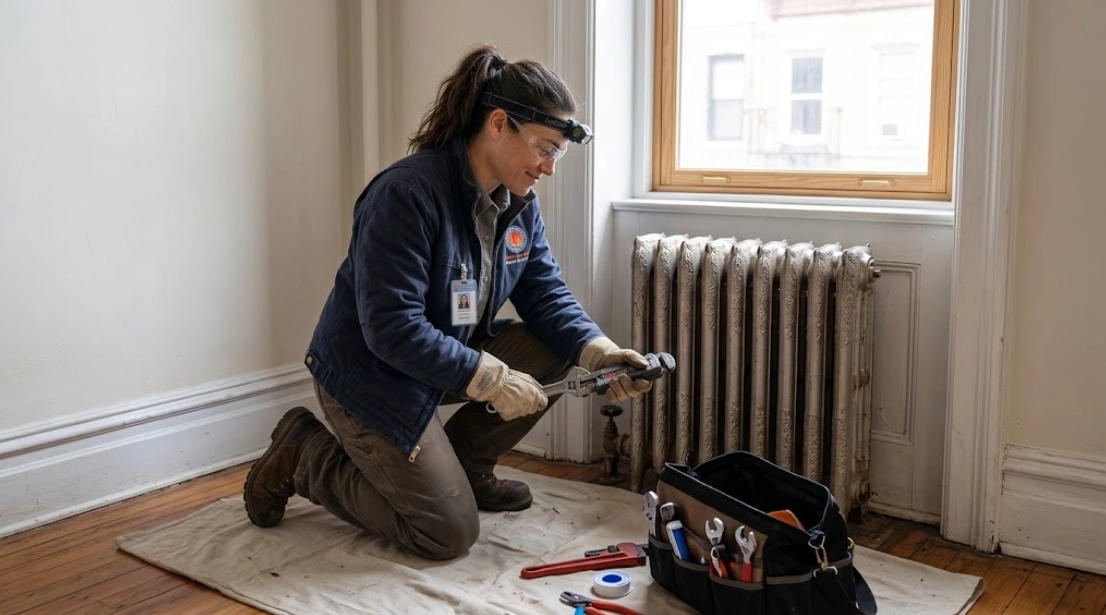
Restoring Balanced, Quiet Steam Heating in Madison
Cast-iron steam radiators are an enduring feature of residential architecture across Madison, Marine Park (west), and Midwood. When operating according to original engineering principles, low-pressure steam heat provides comfortable, steady radiant warmth throughout harsh Brooklyn winters. However, decades of structural settling, pipe corrosion, mineral buildup, and improper replacement valves frequently result in noisy, unbalanced heating. Homeowners in need of experienced radiator repair Madison Brooklyn can count on specialized troubleshooting tailored specifically to low-pressure steam distribution.
Whether your home experiences alarming banging steam pipes Madison Brooklyn that rattle walls whenever the burner starts, cold radiators in second-floor bedrooms, or corroded valves leaking brown water onto wood floors, resolving these issues requires an understanding of pipe slope, valve design, and air venting rates. Many radiator issues tie directly back to central pressure regulation, which we coordinate through our main boiler repair in Madison service.
Why Steam Pipes Bang, Clatter, and Hammer
The violent clanging often heard in steam-heated homes is not an inevitable quirk of older housing; it is an engineering problem caused by trapped condensate colliding with expanding steam.
The Mechanics of Water Hammer
Steam travels through distribution piping at speeds exceeding 25 to 30 miles per hour. When cooler condensed water pools in a sagging horizontal pipe or an improperly pitched radiator rather than draining back to the boiler, oncoming steam pushes across the pooled water, picking up a moving slug of liquid. When this high-speed water slug strikes an elbow or radiator header, it produces violent mechanical shockwaves that shake pipes and produce loud metallic banging.
Incorrect Pitch & Floor Settling
In older homes across Madison, natural foundation settling often causes floor joists to tilt slightly away from steam risers. In single-pipe steam systems, the radiator must slope downward toward the supply valve so gravity can carry returning condensate back into the riser pipe. Even a slight reverse slope traps water at the far end of the radiator, causing chronic knocking, spitting air vents, and localized cold spots.
Radiator Valves and Air Vent Balancing
Two small mechanical components govern the operation of every steam radiator: the supply shutoff valve and the thermostatic air vent. Malfunctions in either component prevent normal heating.
Steam Radiator Valve Replacement
The radiator supply valve controls the entry of steam into the unit. Over time, high temperatures and mineral deposits degrade internal bronze stems, seats, and graphite packing rings. Common symptoms requiring steam radiator valve replacement Madison Brooklyn include:
- Leaking Packing Glands: Water or steam seeping from under the valve handle during heating cycles, damaging flooring and building materials.
- Frozen or Stripped Handles: Stems seized solid from internal mineral calcification, preventing homeowners from closing off rooms during maintenance.
- Partially Throttled Valves: On single-pipe systems, valves must be 100% open or 100% closed. Leaving a valve half-open restricts returning condensate, causing instant water hammer.
The Vital Role of Thermostatic Air Vents
Before steam can fill a radiator, cooler air occupying the cast-iron body must escape. The air vent contains a heat-sensitive bimetallic element or alcohol bellows that remains open to vent air, snapping shut when hot steam touches it. If an air vent corrodes shut, air remains trapped inside, preventing steam from entering and leaving the radiator cold. If the vent fails open, steam continuously hisses into the room, causing excessive humidity, fuel waste, and low boiler water levels.
One-Pipe vs. Two-Pipe Steam Systems
Recognizing the difference between one-pipe and two-pipe steam systems is essential for diagnosing radiator performance:
One-Pipe Steam Systems
In a single-pipe system, a single connection at the bottom of the radiator serves as both the steam inlet and the condensate outlet. Steam rises through the pipe while liquid condensate trickles downward along the pipe walls in the opposite direction. Air vents mounted on the side of each radiator allow air to escape. Supply valves must remain fully open during operation.
Two-Pipe Steam Systems
In a two-pipe system, steam enters through a supply valve at the top or bottom of one end, while condensate and air exit through a thermostatic steam trap at the opposite bottom end. Two-pipe systems do not feature air vents on the radiators themselves; air is vented through central basement mains. A failed steam trap in a two-pipe system allows live steam to blow into return lines, wasting fuel and overheating basements.
Safety Precautions & When Replacement Is Needed
Important Homeowner Safety Precautions
Steam heating operates with scalding water vapor reaching temperatures of 212°F (100°C) or higher. Never attempt to remove air vents, loosen spud unions, or dismantle valve packings while the heating system is active or pressurized. Doing so can cause severe steam burns. Always wait until the heating plant is fully cool before inspecting exterior connections.
While most radiator problems can be remedied through valve rebuilds, vent replacements, and pitch adjustments, cast-iron radiators that have sustained physical freeze cracks or severe internal wall erosion require full section replacement. If you are also evaluating central equipment upgrades, visit our boiler replacement in Madison page. To confirm our coverage, check our service areas or reach us through our contact page.
Frequently Asked Questions About Radiator Repair
Answers to common steam heating questions from Madison residents.
Why is my steam radiator banging and clattering so loudly?
Banging in steam heating pipes—known as water hammer—is caused when cooler condensed water pools inside radiators or horizontal supply pipes instead of draining back to the boiler. When high-velocity steam collides with this pooled condensate, it drives a slug of water violently into pipe fittings and radiator headers. Correcting the radiator pitch, servicing malfunctioning air vents, or replacing worn supply valves resolves the issue.
Why is one radiator in my home cold while others are fully hot?
A cold steam radiator is almost always caused by a malfunctioning air vent. For steam to fill a cast-iron radiator, the cold air inside must first escape through the thermostatic vent. If the vent is stuck shut due to mineral deposits or corrosion, trapped air creates a barrier that blocks steam from entering the radiator.
Can I adjust a single-pipe steam radiator valve halfway to lower the room temperature?
No. On a single-pipe steam system, the radiator supply valve must remain either 100% fully open or 100% completely shut. In a single-pipe system, steam enters and condensed water returns through the exact same pipe opening. Throttling the valve halfway restricts the passage, trapping condensate inside the radiator and causing violent hammering, spitting vents, and water leaks.
How is a leaking radiator valve repaired?
Water leaking around the valve handle stem typically indicates dried-out graphite packing beneath the packing nut. A technician can repack the gland with fresh graphite packing string and tighten the nut while the system is cool. However, if the internal bronze disc, seat, or spud union is eroded or cracked, full valve replacement is necessary.
Restore Quiet, Balanced Heat to Your Madison Home
Call our telephone team to describe your radiator issues and schedule an on-site steam heating diagnostic in Madison (Brooklyn), Brooklyn.
Call (315) 202-8009